Infrared Scanning
Infrared scanning, also known as infrared thermography or thermal imaging, is a non-contact, non-destructive method of capturing and visualizing the infrared radiation emitted by objects. Infrared scanning allows our team to locate your in floor heating components to ensure that they are not damaged during the course of your project.
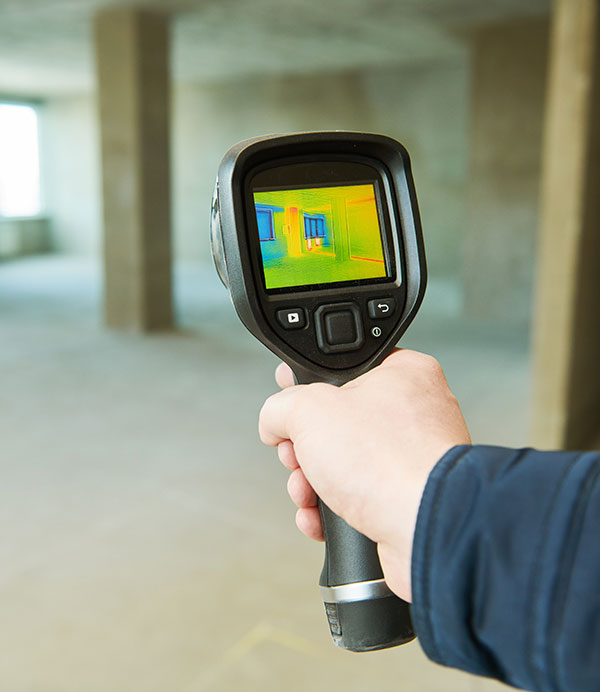
Ways we put infrared scanners to use:
- To reduce the risk of workplace accidents and create a safer environment for workers.
- Before cutting to detect hidden electrical conduits, plumbing, or other utility lines to avoid accidental damage.
- To avoid costly repairs or project disruptions caused by cutting through hidden utilities or structural elements.
- To evaluate the concrete before renovation work, ensuring a clear understanding of what lies beneath the surface.
- To ensure adherence to construction and safety codes by identifying critical components that must remain intact during cutting.
Benefits of infrared scanning:
- Identifies abnormal heat patterns in machinery and electrical systems before failure occurs.
- Ideal for inspecting delicate or hazardous components without causing damage.
- Enables inspections in low-light conditions and through smoke, dust, or certain materials.
Need help locating heated components before a project? Contact National Concrete Cutting for a free infrared scanning quote!
Infrared Scanning Before Concrete Cutting and Drilling
Infrared scanning, also known as thermal imaging or infrared thermography, is used to identify heat patterns before cutting, drilling, or modifying concrete. It is especially useful when radiant floor heating or other heated components may be present.
National Concrete Cutting Inc. provides infrared scanning for concrete cutting and drilling projects across Kingston and Southeastern Ontario.
Before cutting into a heated slab or floor, infrared scanning can help identify where heat-producing components may be located. This helps reduce the risk of damaging radiant heating lines or other heated systems during the project.
Common Uses for Infrared Scanning
Infrared scanning can help with:
-
Locating radiant floor heating patterns
-
Identifying heated zones before cutting
-
Reviewing thermal differences in a slab or floor
-
Planning cuts around heated components
-
Reducing the risk of damage during renovation work
-
Supporting pre-cutting and pre-drilling checks
Infrared Scanning and GPR Scanning Work Well Together
Infrared scanning is useful when heat signatures are present. GPR scanning is useful when the concern is embedded materials such as rebar, conduit, pipes, or voids.
Depending on the job, we may recommend GPR scanning, infrared scanning, or both before cutting or drilling begins.
Need to scan a heated slab before cutting or drilling?
Call or text (613) 888-5716 for a free infrared scanning quote.
Frequently Asked Questions
Why is infrared scanning used for before concrete cutting?
Infrared scanning is used to help locate heat patterns, radiant floor heating, and heated components before concrete cutting or drilling.
Can infrared scanning find rebar?
Infrared scanning is not the best choice for finding rebar. GPR scanning is usually more appropriate for locating rebar, conduit, pipes, and embedded objects.
Should I use infrared scanning or GPR scanning?
Use infrared scanning when heat patterns or radiant heating are the concern. Use GPR scanning when you need to check for rebar, conduit, pipes, voids, or embedded objects.